

Incineration
Waste Management › Incineration
Some waste streams cannot be decontaminated back into service, stabilised into an inert form, or accepted at landfill. Where the contaminant is organic (hydrocarbon sludges, oily solids, spent filters, contaminated PPE, absorbents and mixed HazMat arisings), controlled high-temperature incineration destroys it rather than relocating it.
THIS manages incineration as part of the same turn-key waste route as every other disposal option. The waste is characterised, classified and pre-treated first, so that only the fraction that genuinely requires thermal destruction is sent for it. That keeps both cost and emissions load down, and it keeps the manifest defensible.
HARRIS: HAzardous Relocatable Rotary Incinerator System
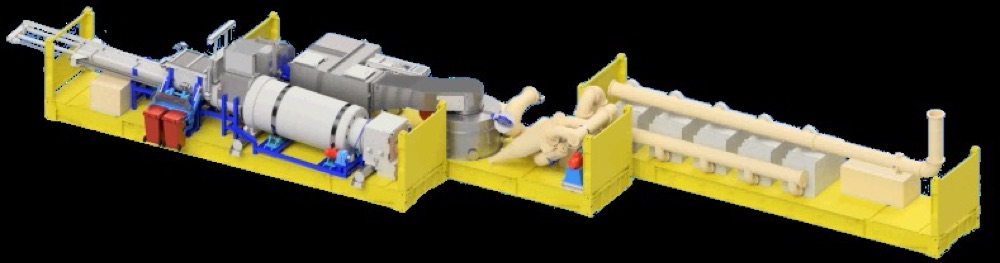
HARRIS is THIS Group’s own closed-loop, continuous-process, counter-current rotary incinerator, customised for toxic and hazardous waste such as hydrocarbon sludge, fluids, PPE and scale. Each unit is engineered for the target contaminants, including mercury, NORM and PFAS-containing AFFF fire-fighting foams. This solution is unique to THIS Group.
The system is semi-modular and relocatable, built into three 40ft ISO containers, so it can be mobilised to the waste rather than the waste being shipped to it. It runs fully automated with remote operation and Continuous Emission Monitoring (CEM) of emissions and waste by-products.
Designed internal adsorption filters and wet scrubbers remove and concentrate the target contaminant for ultimate disposal by retort. HARRIS reduces the total mass requiring treatment by retort by 90 to 95%, which is where the cost of a mercury or NORM waste stream actually sits.
Configuration
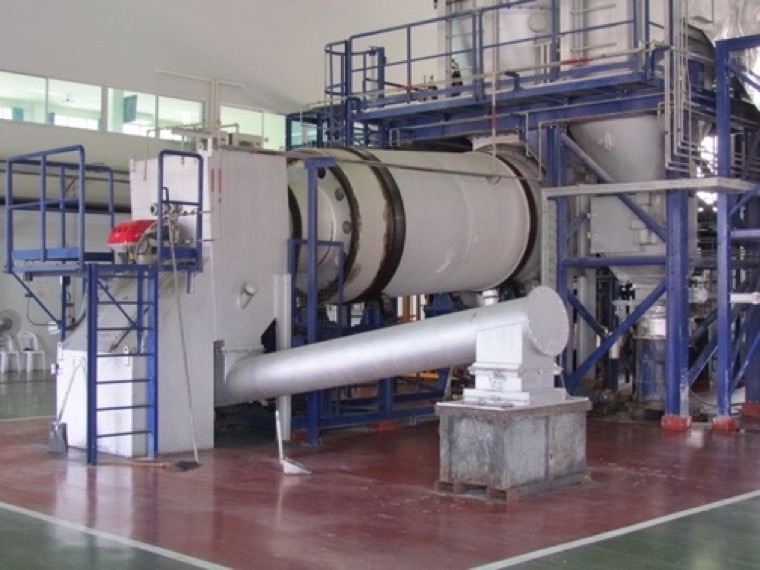
Auto loader, hydraulic RAM feeder, primary combustion / rotary kiln, secondary combustion / scrubber, mercury adsorption unit and exhaust stack.
| Waste types | Sludge, fluids, PPE, other solid and fluid waste |
|---|---|
| Process type | Rotating, counter-current, closed loop, continuous |
| Retention time | Typically 0.5 to 3 hours |
| Pressure | Atmospheric |
| Temperature | 850 to 1100°C flue gas; 700 to 1000°C kiln ash |
| Monitoring | Remote operation with Continuous Emission Monitoring (CEM) |
| Mass reduction | 90 to 95% reduction in mass requiring treatment by retort |
Removal on Mercury-Contaminated Waste Streams
| Mercury (Hg) | 100% |
|---|---|
| Hydrocarbons (CxHy) | 100% |
| Water (H2O) | 80% |
| Sulphur (S) | 15% |
| Chlorine (Cl) | 1% |
| Arsenic (As) | 0.5% |
Incineration Is the Last Option, Not the Default
Multi-waste-type disposal contractors have a commercial incentive to bulk-charge everything at the highest disposal classification. That is the practice this service exists to avoid.
Every stream is assessed against recovery first, volume reduction and stabilisation second, and thermal destruction last. In practice, most of the mass arising from a decontamination scope can be decontaminated to a recyclable standard, and only a small residual fraction reaches HARRIS.
Tell us what you need decontaminated.
Send us the asset, the contaminant and the constraint. We will tell you what is achievable, where it can be done, and what compliance evidence you will get at the end of it.