

Decontamination
Decommissioning of mercury-contaminated offshore platforms, marine vessels and pipelines requires the full decontamination of mercury to ensure safety and environmental compliance for disposal, recycle and/or refurbishment. Using a combination of proprietary processes and the only independently proven mercury desorption chemistry available, this can be carried out either onshore or offshore*, and includes waste volume reduction and stabilisation processes.
THIS has the technology and experience to fully decontaminate mercury from simple components such as spools and flanges as well as complex and sensitive systems such as Intelligent PIG tools, valves, heat exchangers and skid-mounted ancillaries. This includes the desorption and decontamination of carbon steel prior to hot work activities such as welding, grinding or sand blasting.
*Depending upon scope, support capabilities and regulatory approval.
Operating Environments
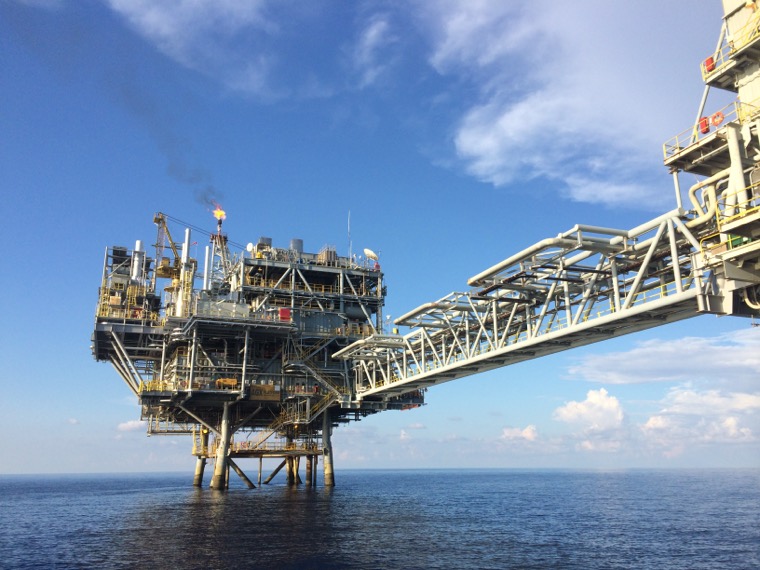 Offshore Decontamination
Platform topsides, process trains, risers and export systems treated in place where practical, with containment, vapour control and clearance verification carried out under live-facility constraints.
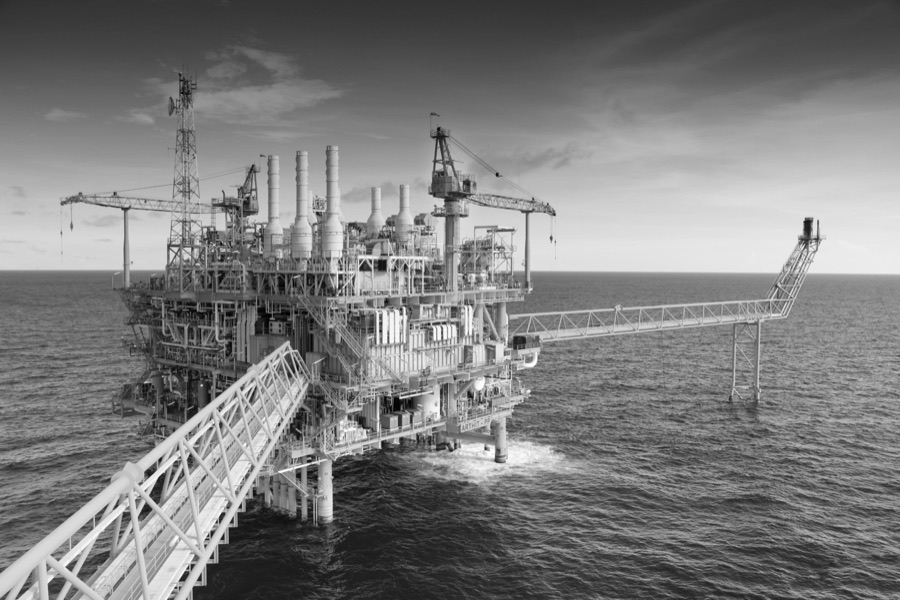 FSO & FPSO Vessels
Cargo and slop tanks, inert gas systems, process modules and piping decontaminated for hot work, class survey, refurbishment or green recycling, including volume reduction and stabilisation.
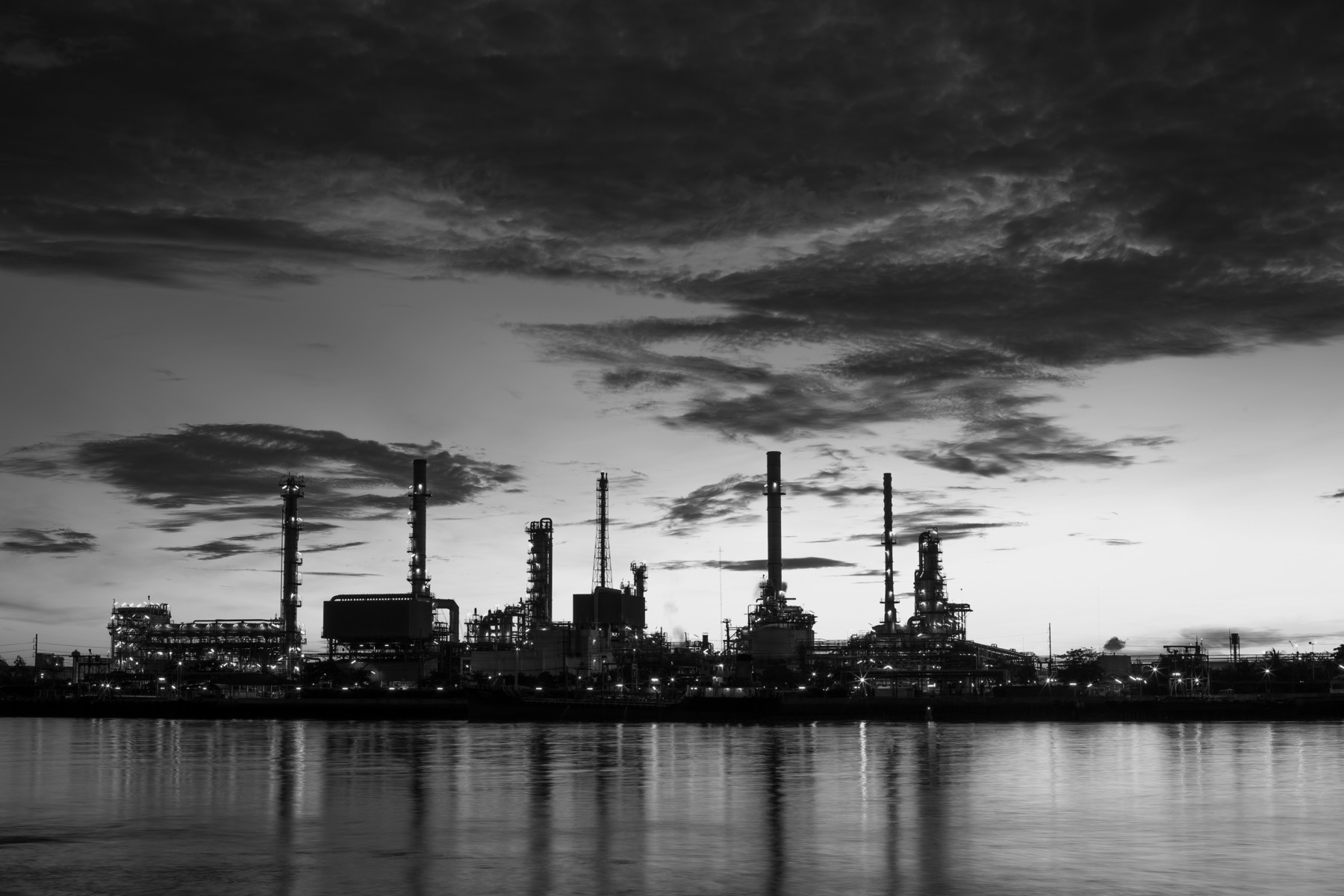 Onshore Decontamination
Platforms, marine vessels, tanks, towers, columns and piping decontaminated of mercury and hydrocarbon-borne contaminants from the vapour space and process flow streams.
What We Decontaminate
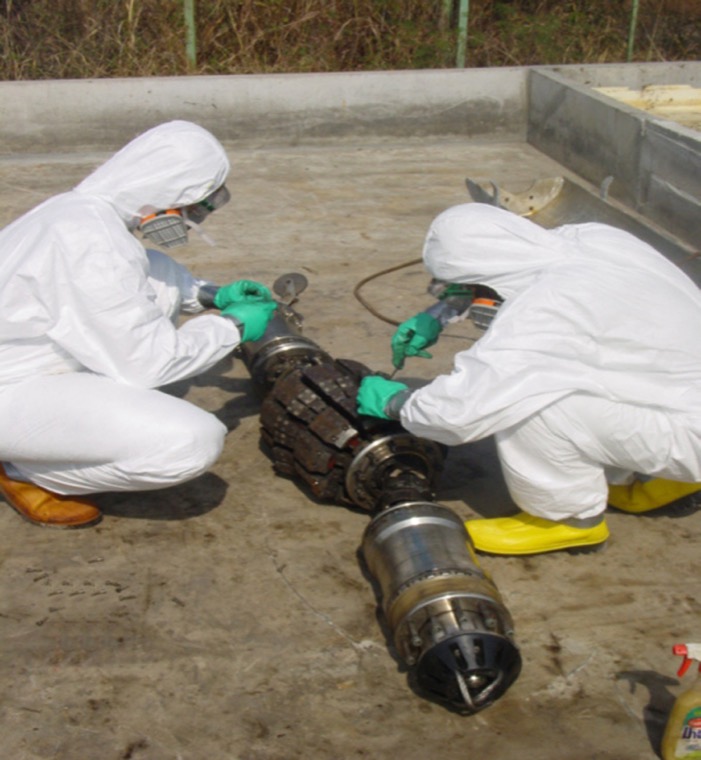 PIG Tools & Ancillaries
Intelligent and conventional pipeline inspection gauges, launchers, receivers and associated ancillaries, including tooling too sensitive for aggressive chemical or thermal treatment.
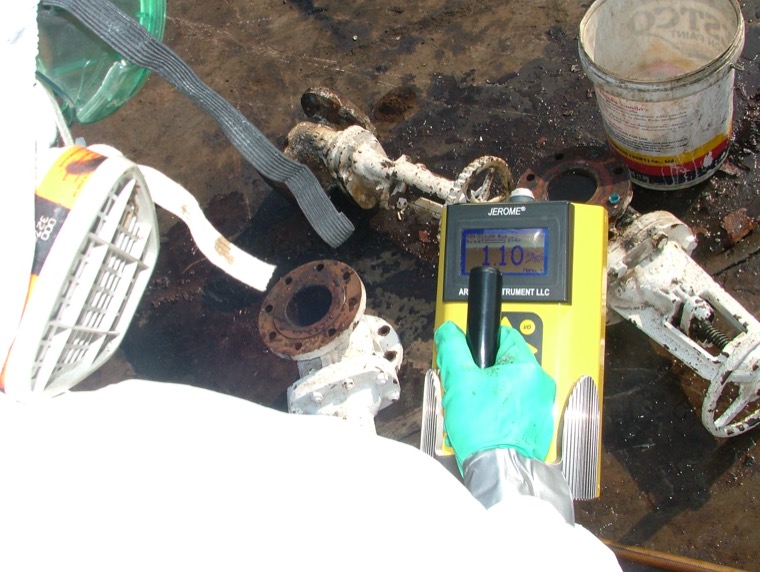 Valves & Flanges
High-volume component decontamination with segregation, treatment, verification and return to service or release for recycling.
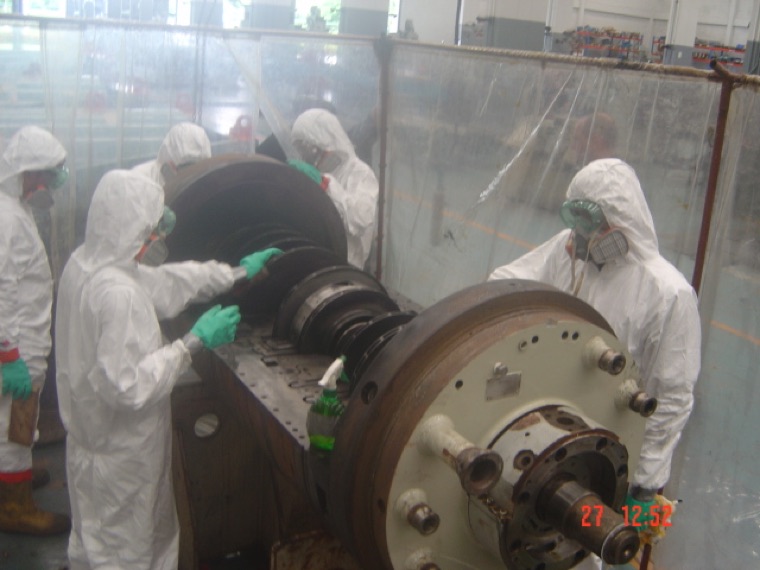 Gas Compressors
Closed-loop circulatory decontamination of gas compressors and rotating equipment, including units returned to service or shipped overseas after treatment.
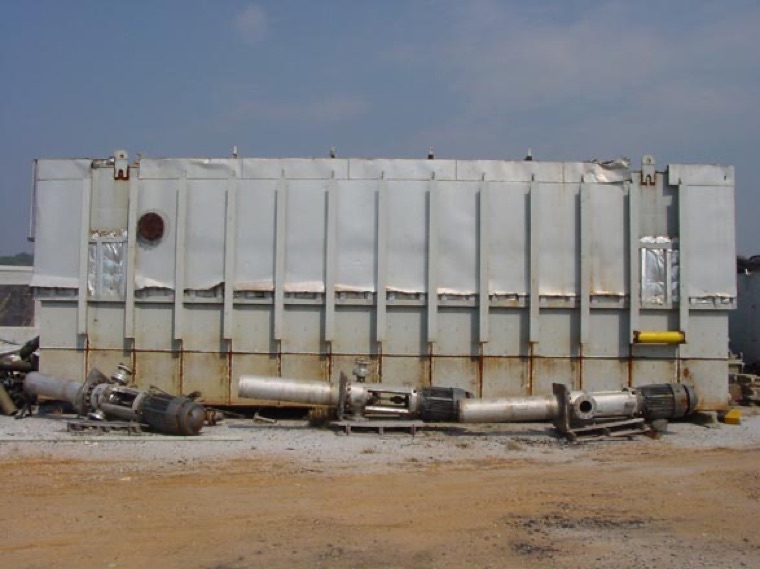 Separators & Pressure Vessels
Internals, demisters and vessel walls where mercury, scale and sludge accumulate together and must be classified before removal.
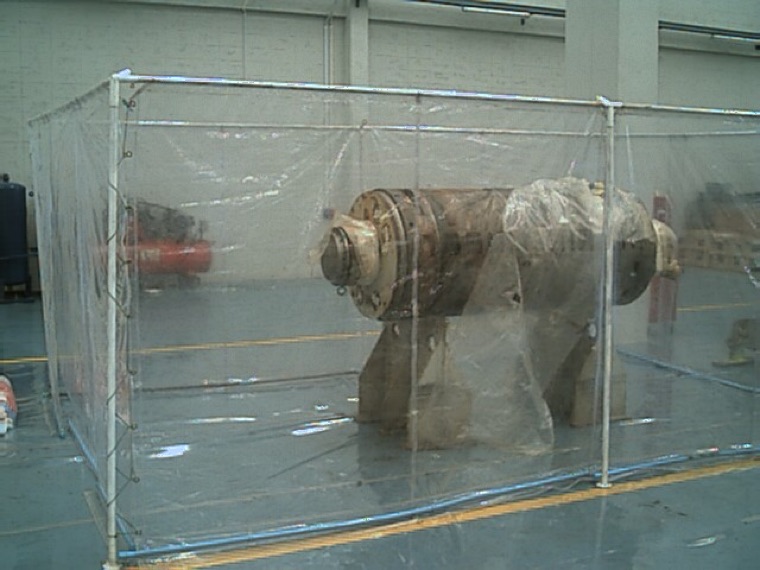 Process Ancillaries & Portable Units
Skid-mounted support packages, portable units and hand tools returned to a controlled condition for reuse, under temporary containment where required.
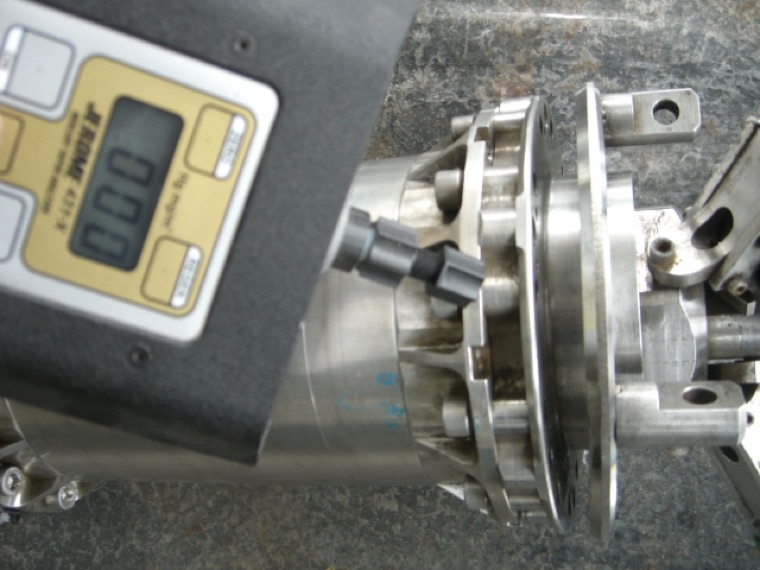 Sensitive Systems & Instrumentation
Analysers, transmitters and control equipment where the method has to remove contamination without destroying calibration or seals.
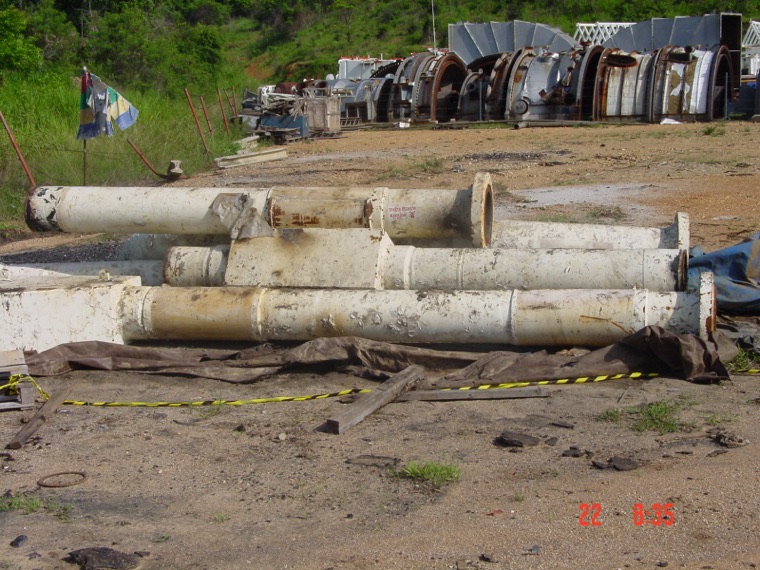 Subsea Pipelines
(In Situ)
In-situ treatment of subsea lines ahead of abandonment or recovery, avoiding the cost and exposure of bringing contaminated line to surface untreated.
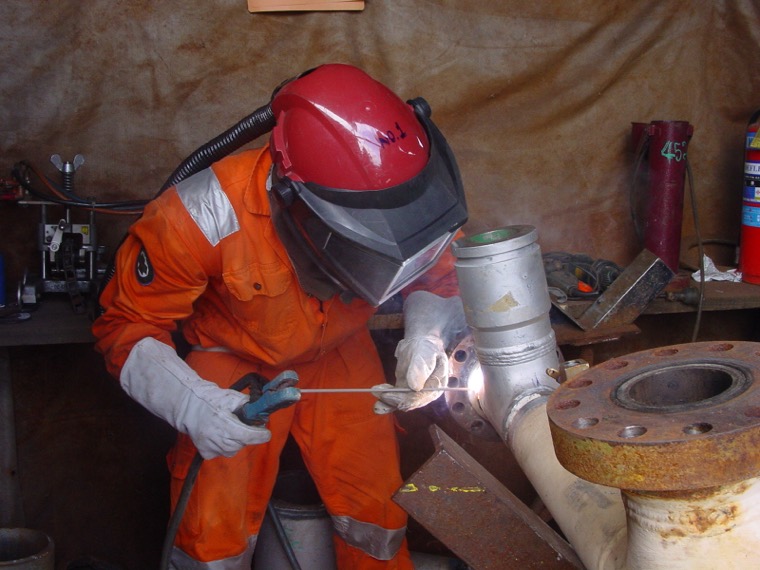 Hot Works Preparation
Rapid localised desorption and decontamination of carbon steel prior to welding, grinding or sand blasting, so hot work permits can be issued against evidence.
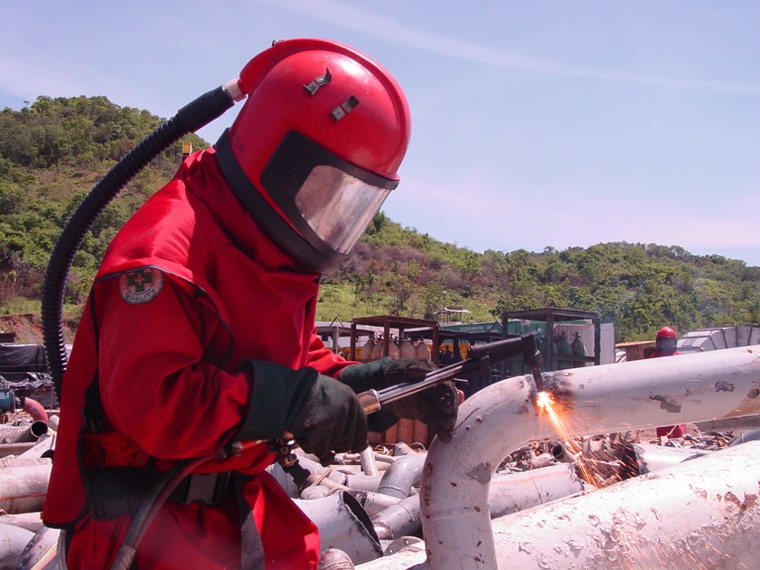 HazMat Demolition
Controlled cutting and dismantling of contaminated structures with vapour suppression, containment and waste segregation at the point of arising.
 Decommissioned Subsea Infrastructure
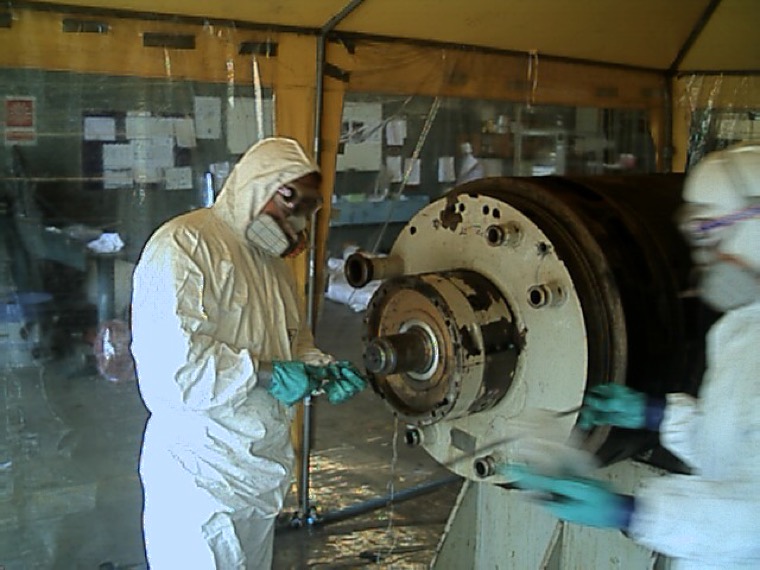
Decommissioned pipe, spools, manifolds and structural steel treated to a standard that permits recycling rather than hazardous disposal. This is the largest single lever on decommissioning waste cost.
MerCure Decontamination Chemistry
THIS has developed a trade-secret formula, MerCure, for the complete desorption and decontamination of mercury from carbon steel matrices. It is a complex acid-based chemical that breaks up scale and captures both elemental and compound mercury, drawing chemisorbed Hg out of steel and scale and sequestering it in a non-soluble form so it cannot re-deposit. The conversion is irreversible and stable to 300 to 350°C, so it will not break down, re-vaporise or become bioavailable.
Applied as a circulatory flush or by high-pressure impingement, MerCure has been repeatedly shown in independent laboratory and client workshop testing to reduce Hg from percentage-range levels to non-detectable by pXRF within hours. A third-party Certificate of Performance is available on request.
MerCure is a trade-secret formula applied by THIS under a service agreement. It is not sold as a product and is not supplied separately.
MerCure PG is the same principle engineered as a gel, for open surface areas such as flare boom structures and shadow areas of floors and walls where high-pressure impingement cannot reach. It is applied by lance, handheld spray or brush, left for a set contact time and washed off with water. No separate gel breaker is required.
HEF Decontamination Units
 HEFU
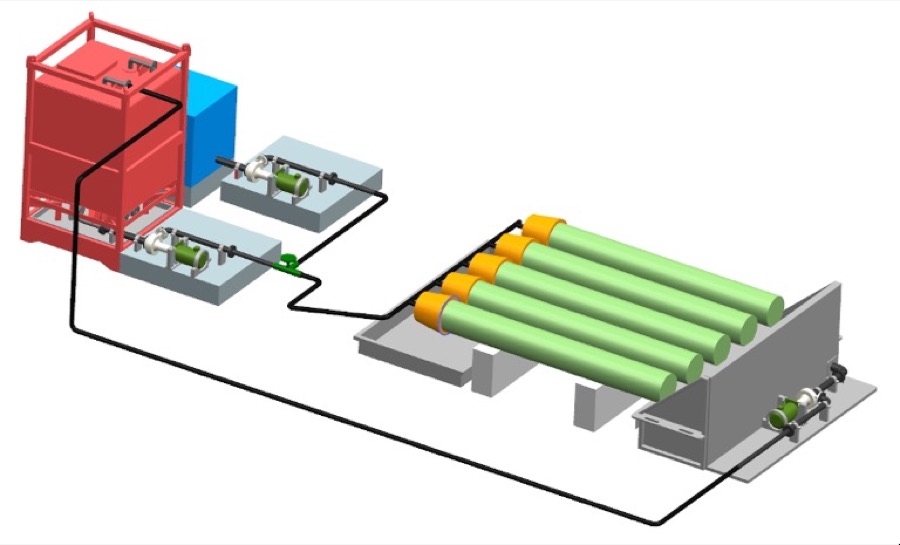
HEFU
High Energy Flushing Unit. Pipe sections over 5 m, any internal diameter.
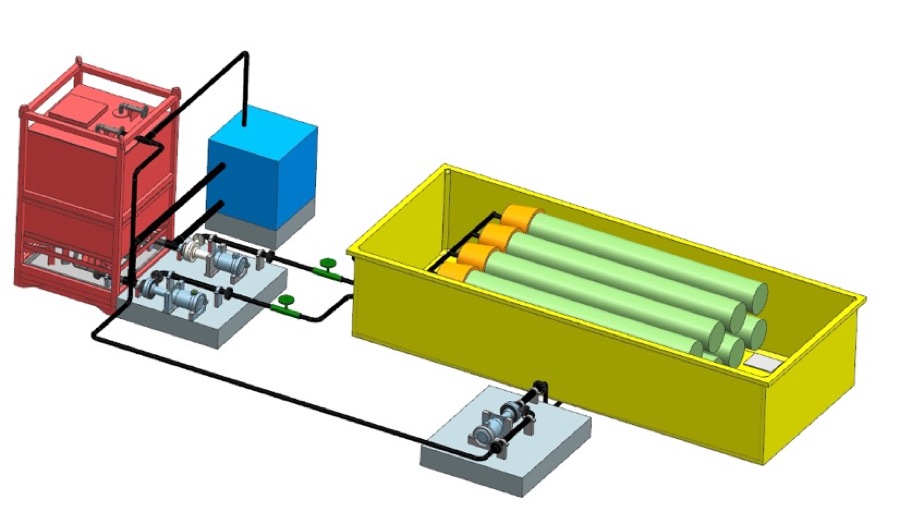 HEFT-P
High Energy Flushing Tank, Pipe. Short pipe sections under 5 m, any internal diameter.
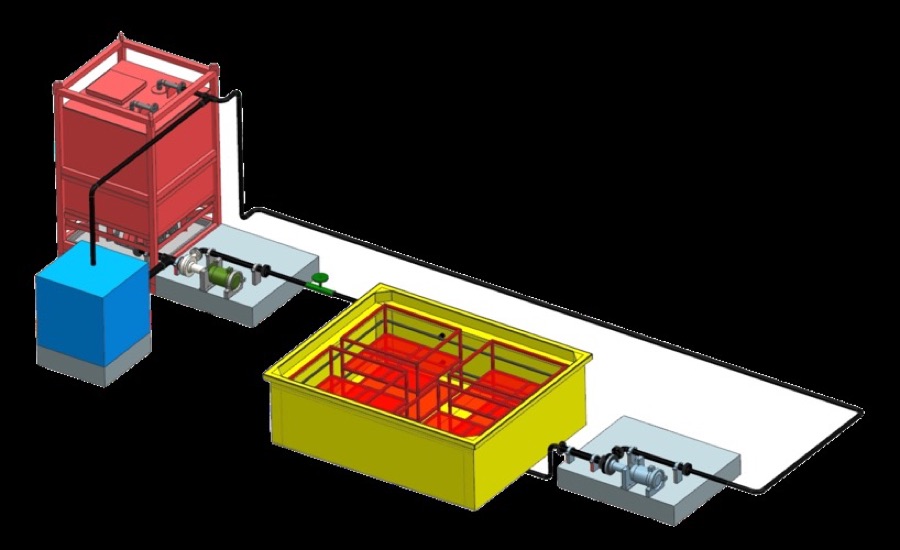 HEFT-E
High Energy Flushing Tank, Equipment. Complex equipment of various sizes.
Work is carried out in a dedicated decontamination bay with a reinforced concrete floor, drain sump and perimeter walls with dual impervious layers and high molecular weight polyethylene shielding, fitted with chemical splashproof curtains and floor, drain and ceiling vapour extraction.
Verification & Compliance
A decontamination scope is only finished when it can be evidenced. Once full surface decontamination has been carried out, compliance is confirmed by testing with both handheld XRF analysers and mercury vapour analysers, and recorded against the asset.
Every asset that leaves our control carries chain-of-custody documentation compliant with OSHA, Ministry of Industry (MOI) and Pollution Control Department (PCD) requirements, whether it is returning to service, going for recycling, or moving to licensed final disposal.
Tell us what you need decontaminated.
Send us the asset, the contaminant and the constraint. We will tell you what is achievable, where it can be done, and what compliance evidence you will get at the end of it.